
Norfolk County Projected Versus Actual Release
A projected date estimates when custody may end under the sentence and credits known at a point in time. An actual date records the event that took place. Massachusetts uses several dates that answer different questions. Parole eligibility marks when the Massachusetts Parole Board may consider release. Earliest Release Date, or ERD, includes eligibility and deductions that may be earned. ERD Max looks to the maximum date of the controlling sentence, includes earned-good-time and program deductions, and excludes parole eligibility. A release-to-supervision date is another statutory calculation for certain state prisoners.
A pretrial detainee is not serving a final sentence merely because the person is held at the Norfolk County Correctional Center. Bail, recognizance, a court order, dismissal, transfer, or later sentence can determine the exit. Do not create a projected date from a court calendar or from the jail's general release hours. A sentenced person has a base term, but the final day can still move.
| Date | What it means | What it does not prove |
|---|---|---|
| Parole eligibility | First point at which parole may be considered | That parole will be granted or release will occur |
| ERD | Earliest eligibility with parole and deductions that may be earned | A fixed walk-out date |
| ERD Max | Earliest date tied to the controlling maximum with eligible deductions | The date shown to all users online |
| Actual release | Recorded custody exit, discharge, parole, or transfer | That the person entered the community if another agency received custody |
Find a Norfolk County Projected Release
Massachusetts does not document a public VINELink field that always shows a projected or tentative release date. MADOC's official housed-person instructions send users to VINELink for current participating state-prison custody. That search is useful for current status, but it is not a public calculation-sheet archive. For a person at MCI-Norfolk or Pondville, request the sentence-calculation material from MADOC rather than telling a user to click an ERD field that may not exist.
- Identify the custodian: NCSO for the county facility, MADOC for state prison, or the federal agency for federal custody.
- Obtain the court's sentence or mittimus, including minimum and maximum terms, consecutive or concurrent structure, and jail credit.
- For Sheriff Patrick W. McDermott's NCSO, request the earned-time and jail-credit calculation plus the eventual release transaction.
- For MADOC, request ERD, ERD Max, maximum date, jail credit, awarded credits, controlling sentence, and calculation sheet.
- Check parole decisions, court orders, and any receiving-agency hold that can affect the route or date.
- After the person leaves, obtain the final event record and distinguish community release from transfer.
The official MADOC locator instructions are captured in the source image.
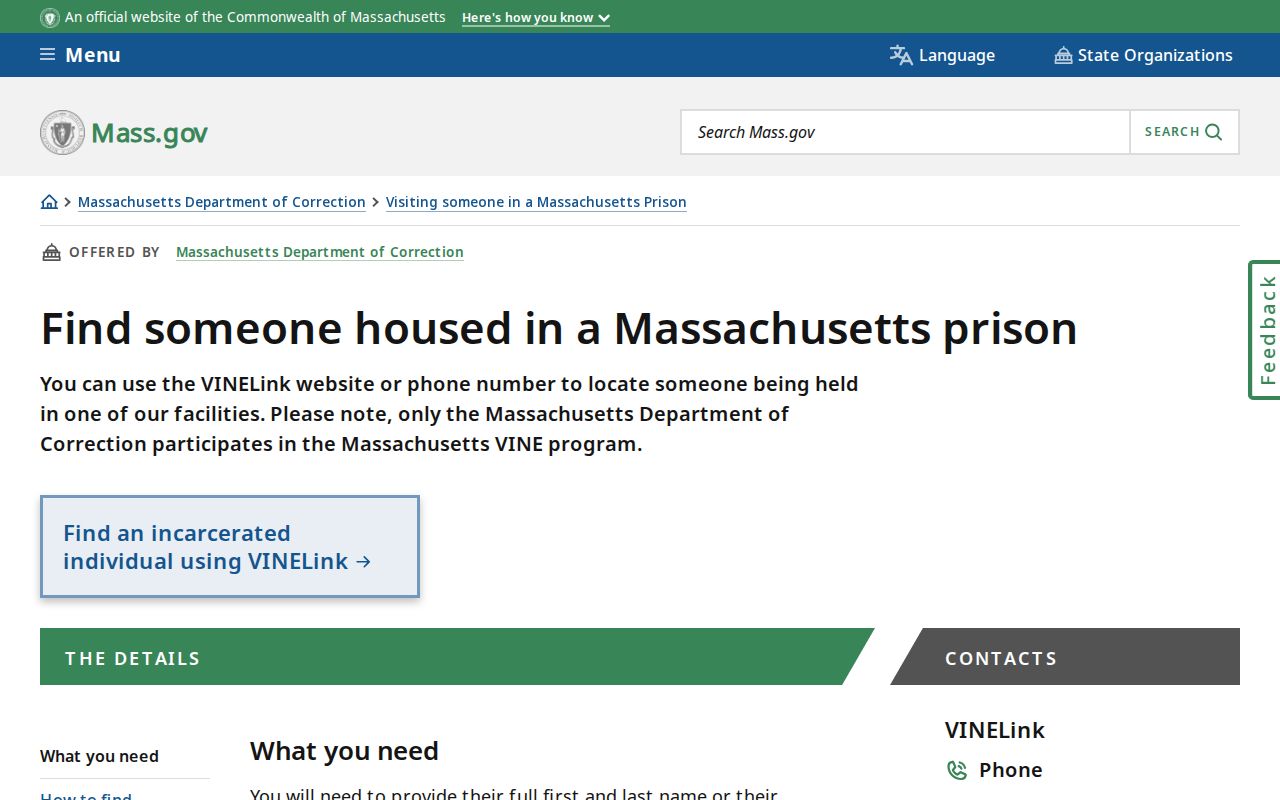
The image confirms the current-custody route. It does not show that every Norfolk County projected release date is public.
Note: NCSO does not own a state-prison calculation simply because MCI-Norfolk or Pondville stands within Norfolk County.
How Norfolk County Release Dates Form
A sentence calculation starts with the judgment. A house-of-correction sentence may be a definite term. A state-prison sentence commonly has minimum and maximum terms. Concurrent sentences run at the same time, while consecutive terms follow one another. The controlling offense and any mandatory minimum matter. Qualifying time already spent in custody may count as jail credit. Begin with the MassCourts case record, then apply only the credits shown by the custodian.
Later events can alter the result. A new sentence may change the controlling term. A court or appellate order can revise the judgment. Credits can be earned, lost, restored, or recalculated. A detainer, which is a request or hold from another authority, can change where the person goes even if the original sentence reaches its release point. Parole may produce conditional release, while denial leaves the sentence calculation in place.
Norfolk's deidentified Chapter 126 quarterly report includes earned time, sentence length, and jail credit. That proves the Sheriff maintains those kinds of data. It cannot identify a named person because the report omits names and is not a person lookup. Request the named NCSO calculation through the Sheriff's public-records channel and obtain the court record for an individual answer.
Norfolk County Earned-Time Rules
Massachusetts law does not impose a blanket rule that every prisoner serves exactly 85 percent. The 1994 truth-in-sentencing changes ended older statutory good time for offenses committed after June 30, 1994 and changed sentence structures. An old statewide average is not an individual formula. The current earned-deduction framework appears in G.L. c. 127, §129D.
For a state-prison sentence, the statute permits up to 7.5 days per qualifying program or activity each month, with a total monthly ceiling of 15 days. For a house-of-correction sentence, the matching limits are five days per activity and ten total days per month. A designated program can support an additional completion deduction of up to ten days, with a six-month participation condition for that extra house-of-correction credit. Credits require completion and demonstrated competency as determined by the commissioner.
State prisoners may receive up to 80 days of designated completion credit, while aggregate completion credits are capped at 17.5 percent of the imposed maximum. Deductions cannot reduce the relevant imposed minimum or maximum by more than 35 percent. These ceilings do not promise the maximum credit. They set legal limits on credits actually earned and awarded. The MADOC glossary explains ERD and ERD Max in the captured official source.
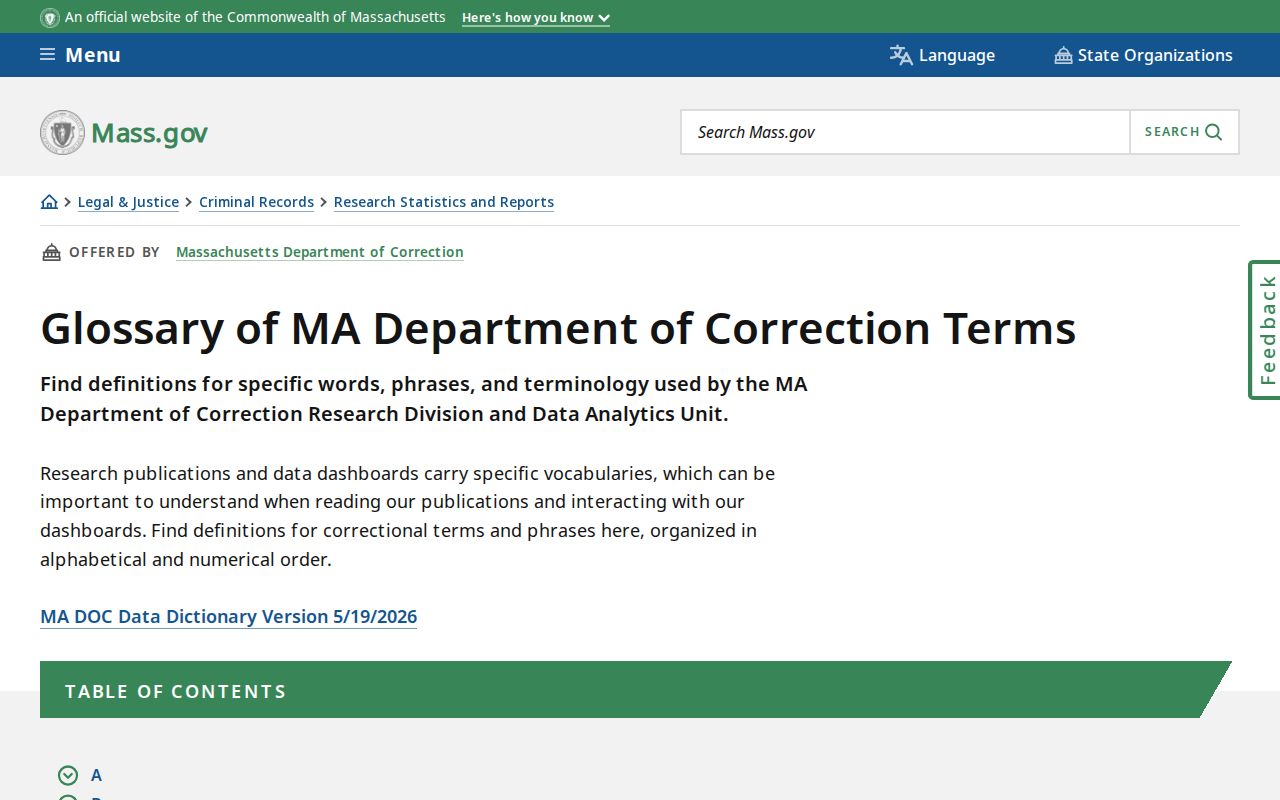
The terms separate eligibility and planning dates from the actual Norfolk County release event.
Norfolk County Has No 85 Percent Rule
The difference between a slogan and the actual law is especially important for Norfolk County projected releases. A state-prison term and a house-of-correction term have different monthly earned-time limits. The award is individual. The sentence date, offense, mandatory minimum, program eligibility, work completed, and controlling term can all affect the result. ERD, ERD Max, parole eligibility, maximum date, and actual release are separate entries.
Section 130B defines a release-to-supervision date based on deductions from the state-prison maximum, but the date cannot be earlier than a 35-percent reduction from that imposed maximum. The provision creates a conditional route to a parole permit for certain qualifying state prisoners who have not otherwise received one, including requirements for completion credits and an approved parole plan. Mandatory-minimum and habitual-offender exclusions matter. It is not automatic release for every person.
The practical answer is a named calculation sheet. For Norfolk County jail time, request the NCSO earned-time and credit record. For MADOC time, request the controlling sentence, ERD entries, credit awards, and maximum. Apply neither a flat percentage nor a date borrowed from another case.
Note: Earned-time limits set what may be credited; they do not show which credits a named Norfolk County prisoner has received.
Changes to Norfolk County Release Dates
A projected release date can move before the custody event. Some changes affect the amount of time. Others affect only the destination or the point at which a person can be considered for parole. Read each record in its own lane.
| Factor | Possible effect | Best record |
|---|---|---|
| Earned credit awarded | May move an eligible planning date earlier within legal caps | NCSO or MADOC calculation sheet |
| Credit loss or restoration | Can move the calculation later or earlier | Updated institutional calculation |
| Jail credit correction | Changes credit for qualifying prior custody | Court order and recalculation |
| New or amended sentence | May change the controlling term | Current docket and sentence record |
| Parole decision | May create conditional release or leave custody unchanged | Board decision and final release transaction |
| Detainer or transfer | May send the person to another authority instead of the community | Release destination and receiving-agency record |
A parole grant is not always the walk-out date. An approved plan, program placement, interstate arrangement, detainer, rescission, or processing step may intervene. Likewise, a maximum date can change after a lawful recalculation. Date every copy and ask whether a newer calculation supersedes it.
Norfolk County Custody Date Sources
For a person at the Norfolk County Correctional Center, use the sentencing court and NCSO. The jail can hold both pretrial and sentenced people, so current custody does not itself prove that a release date exists. The quarterly report is only delayed, deidentified support. A named release date requires the named sentence and calculation record.
For MCI-Norfolk or Pondville, use MADOC. Massachusetts VINELink can report participating current state custody, but the official public instructions do not guarantee a public ERD, ERD Max, photo, or permanent released-person record. Request the calculation and eventual discharge transaction. For a federal person, use the BOP locator and federal record. A BOP result showing released or not in BOP custody does not rule out another authority's custody.
South Bay House of Correction is another local exception. Norfolk County women may be held and physically released from that Suffolk County facility. Suffolk custody records and the Norfolk sentencing or charging court may both be needed. NCSO should be included only when it owns a related booking or transfer record.
Old location results also need care. MCI-Cedar Junction stopped holding incarcerated people in June 2023, and Bay State Correctional Center stopped holding prisoners years earlier. A historical release tied to either closed site remains a MADOC Central Records question. It should not be routed to MCI-Norfolk, Pondville, or NCSO merely because the old institution was in or near Norfolk County. The named release and sentence records identify the correct institution and custodian.
Confirm a Norfolk County Release Date
When a projected day approaches, check the correct current-custody source and any known court or parole action. For a participating MADOC person, a VINELink alert can flag a reported custody change. Registration and its limits are covered in the Norfolk County VINELink inmate search. Massachusetts VINE does not cover NCSO or South Bay county custody under the state's present official participation statement.
After the event, obtain the release transaction. Compare the release institution, date, type, legal authority, and destination. A transfer to another jail, MADOC, federal custody, or immigration custody is not a return to the community. If parole appears, add the Board decision and field-office route. If probation appears, add the sentencing court record. The final record chain should show both when the first custody ended and what legal status followed.
Keep the projected sheet as a dated forecast. Keep the final release record as proof of the actual event. That distinction resolves most conflicts between an old date, a live custody result, and a later discharge record.