
Understanding Norfolk County Released Inmates
A Norfolk County custody exit answers more than one question. It identifies which agency ended its control, when that event was recorded, and whether the person went into the community or to another authority. Sheriff Patrick W. McDermott’s Norfolk County Sheriff’s Office, often shortened to NCSO, records county-jail events at the Norfolk County Correctional Center. Suffolk County owns records for Norfolk women held at South Bay. The Massachusetts Department of Correction, or MADOC, owns state-prison events at MCI-Norfolk and Pondville. Federal agencies retain their own records.
Massachusetts uses precise release terms. Bail and personal recognizance can end pretrial jail custody while the court case remains open. Time served or sentence expiration ends a custodial term. Parole is conditional release from a sentence under the Massachusetts Parole Board. Probation is court-ordered community supervision and does not itself mean the person was held by NCSO. A transfer ends one agency’s custody but is not freedom. “Discharge” generally means the agency or sentence status has ended, though the exact record must still be read.
Norfolk County Release Types
The official Massachusetts release definitions distinguish community exits from changes that keep a person confined. That distinction matters in Norfolk County because one case can cross county, state, federal, and court systems. Read the recorded type and destination together.
| Recorded event | What it means | Next source |
|---|---|---|
| Bail or recognizance | Pretrial jail custody ends under court authority | NCSO transaction and court docket |
| Time served or expiration | The custodial term has reached its lawful end | Release record and sentencing docket |
| Parole | Release is conditional and supervision follows | Release transaction and Parole Board record |
| Probation | Court-ordered community supervision follows | Sentencing docket and court probation office |
| Transfer or another agency | One custody ends while another begins | Receiving sheriff, MADOC, BOP, USMS, or ICE |
| Discharge | The agency or sentence status ends as recorded | Certificate or final release transaction |
Administrative categories can also include home confinement, court release, warrant service, death, escape, or “remain incarcerated.” None should be casually labeled a normal community release. The destination field often resolves the ambiguity. If it names MADOC, another sheriff, federal authorities, or immigration authorities, continue the search with that record owner.
Norfolk County Release Record Fields
A useful Norfolk County release record ties the person to a booking, identifies the legal event, and shows where responsibility went next. NCSO does not publish a person-level release archive, so request each relevant field by name. The custodian may redact exempt material, and the exact fields produced depend on what the office maintains.
| Field | What it shows |
|---|---|
| Recorded name and jail ID | Connects the transaction to the correct person |
| Booking or admission date | Identifies the custody period and starting legal status |
| Release date and time | States when the agency recorded the exit |
| Release type or reason | Distinguishes bail, time served, parole, probation, discharge, or transfer |
| Releasing authority | Names the court, board, or other authority behind the event |
| Destination or receiving agency | Shows whether the person entered the community or another custody system |
| Detainer disposition | Explains whether another warrant or hold affected release |
| Discharge sheet or certificate | Provides the final agency document when one is maintained and releasable |
A docket serves a different role. It may show a dismissal, sentence, jail credit, probation order, warrant, or later court event. It usually does not certify the precise time someone walked out of the Dedham jail. The custody record proves the agency transaction; the docket explains its legal basis.
Request Norfolk County Release Records
NCSO states that it is the jail and house-of-correction record owner, not the police agency that made an arrest and not the court that heard the case. Its public-records channel routes jail requests to records_request@norfolksheriffma.org or to 200 West Street, P.O. Box 149, Dedham, MA 02027. Ask for electronic delivery when practical.
- Identify the person with a full name, aliases, birth date or jail identifier when lawfully known, and the approximate custody dates.
- Add the docket number and the Norfolk facility if known. State that the request concerns the booking, admission, release, or discharge transaction.
- Request the recorded date and time, exact release type, releasing authority, receiving agency or destination category, detainer disposition, and any releasable discharge sheet.
- Ask the office to separate public material from exempt material and identify any exemption used. Request a fee estimate before chargeable work begins.
- Use the police department for an arrest report and the correct clerk’s office for the official court docket or court documents.
Under G.L. c. 66, §10, a records custodian must respond to a reasonably described request within ten business days. A response may produce records or explain exemptions, fees, timing, and appeal rights. Paper copies may cost up to five cents per black-and-white page, and lawful search or redaction labor can also apply. NCSO’s fee classification should be confirmed with its Records Access Officer. Electronic delivery avoids paper costs but does not rule out permitted labor fees.
The official NCSO records page shows the correct custodian route.
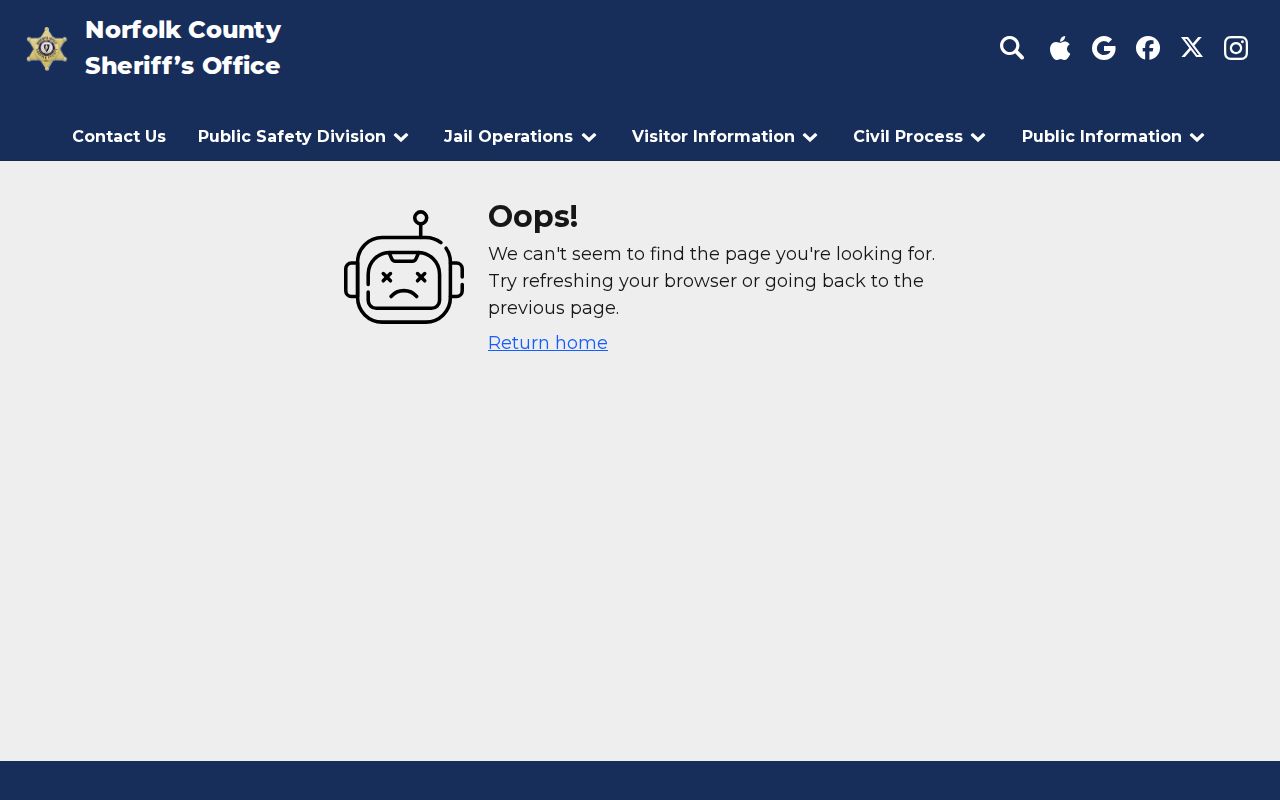
The screen reinforces why a focused request for the actual release transaction is stronger than a broad request for every jail document.
Norfolk Release Records and Access Law
Massachusetts access law combines the request process in G.L. c. 66, §10 with the public-record definition and exemptions in G.L. c. 4, §7. A custodian may redact or withhold protected material but must state the basis and release reasonably separable public portions. Juvenile confidentiality, sealed or impounded cases, expungement, active investigatory needs, safety concerns, medical or private facts, and victim information can limit access.
Retention and disclosure are not the same. The statewide schedule generally calls for many commitment, discharge, booking, central, inmate-folder, and house-of-correction record series to remain for 25 years after final release. Some release and notification series have shorter terms, while state photographs and fingerprint cards may be permanent. A retention period does not promise public access. When an office says it lacks a record, ask which schedule series applies.
Sealing restricts public access. Expungement is the narrower destruction or erasure process defined by Massachusetts law. A blank court search may result from an exact-docket requirement, the wrong court, impoundment, sealing, expungement, or juvenile limits. It is not proof that no case or release existed.
Note: Ask for the public portion and the cited exemption when a Norfolk County release record is withheld or redacted.
Norfolk Bail Release Timing
Norfolk’s dedicated bail page says bail is normally handled from 4:30 to 9:30 p.m. on weekdays and noon to 9:30 p.m. on weekends and holidays, subject to a Bail Commissioner’s availability. The person posting bail should bring valid photo identification and the detained person’s name. NCSO also advises calling 781-329-3705 first to check the bail amount, fee, and whether another warrant or detainer prevents release.
Processing may take about two hours. Older NCSO material lists somewhat different hours and a $40 commissioner fee, so neither online statement should be treated as a guaranteed schedule or current total. A court may set bail, yet another hold can keep the person in custody. The final NCSO release transaction remains the best proof that the person actually left.
The official Norfolk bail page illustrates the current local process and its cautions.
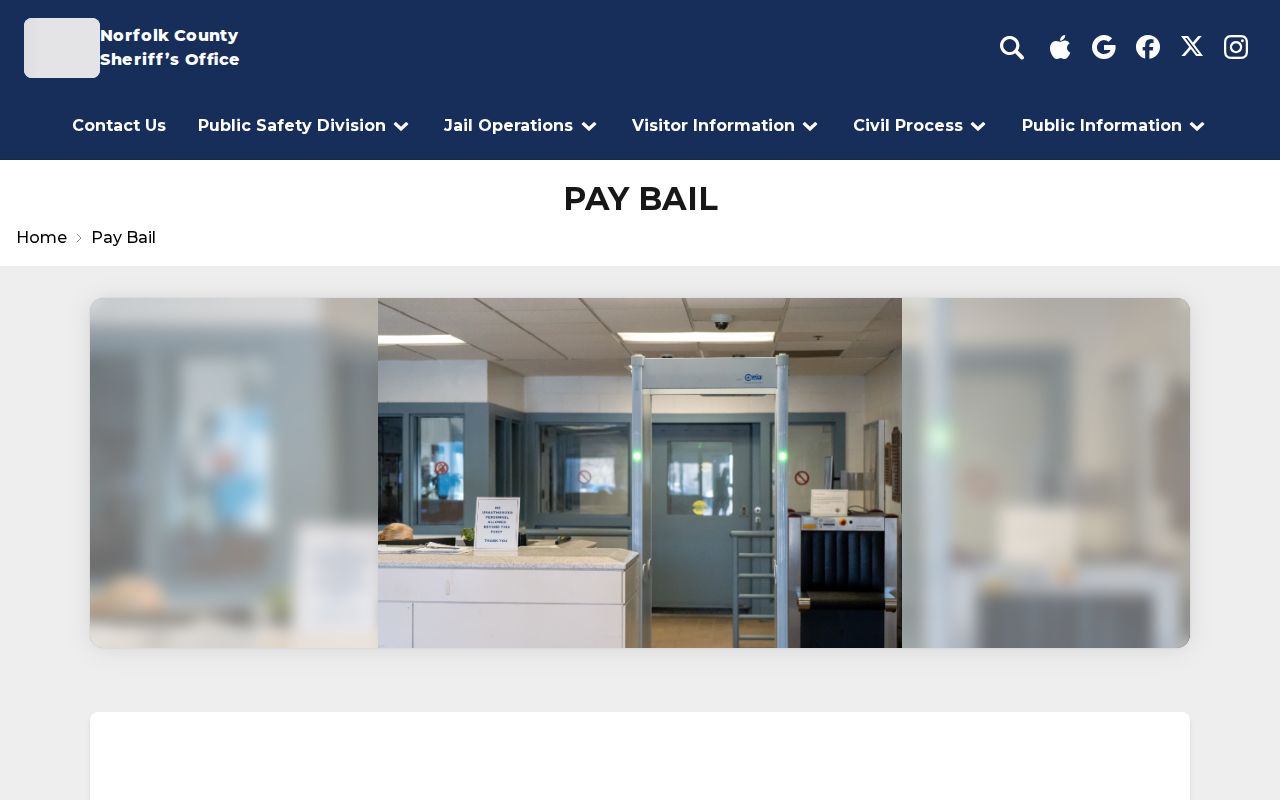
Use the page to plan a bail visit, then use the release record to verify the completed custody event.
Norfolk Release Property Pickup
A person released from court may leave belongings at the Norfolk County Correctional Center. The current NCSO property page gives pickup hours of 9:30 a.m. to 2 p.m., Monday through Friday, and asks the former detainee to bring identification and intake paperwork. It says unclaimed property is disposed of after 60 days.
An older jail FAQ instead gives a 2:30 p.m. closing time and a 30-day holding period. Call before travel because the two official pages conflict. If the owner is incarcerated elsewhere, NCSO says a notarized designation is needed for another person to retrieve the property. Property pickup is practical evidence of a court release, but it is not a substitute for the official release transaction.
Note: Confirm the current pickup window and retention period with NCSO before making a trip to Dedham.
Find Norfolk County Released Inmates
The best search begins with the custody system, not a generic name search. NCSO has no official public inmate-name roster, recent-release feed, or person-level booking archive. Massachusetts VINE cannot fill that gap because the state says only MADOC participates. The Norfolk jail releases in 24 hours route therefore leads with the written sheriff record and court docket, not an invented feed.
- Identify whether the person was at NCCC, South Bay, MCI-Norfolk, Pondville, or in federal or immigration custody.
- For NCSO custody, call 781-329-3705 for current routing, then request the written release transaction for durable proof.
- Find the controlling court docket. Note the disposition, sentence, bail or recognizance order, probation, and later warrants or modifications.
- For MADOC custody, select Massachusetts in VINELink. Treat a missing result as “not found,” then request the historical MADOC release record.
- Check the Parole Board when parole is recorded, or the sentencing court’s probation office when probation was ordered.
- Follow a receiving-agency field into BOP, USMS, ICE, another sheriff, or another state system rather than calling a transfer a community release.
Why is the person gone from the roster? A live roster reflects current custody, not a full release history. Removal can follow community release, transfer, data correction, or another status change. Confirm the event with the record owner and one supporting source.
Norfolk County MADOC Release Lookup
MCI-Norfolk and Pondville are state prisons. Their release records belong to MADOC even though both facilities stand in Norfolk County. The official MADOC locator instructions send the public to VINELink or the VINE telephone service at 866-277-7477. Search by full first and last name or commitment number, select Massachusetts, and compare the identity and institution carefully.
The public instructions do not promise a lasting former-prisoner profile or a public ERD field. ERD means Earliest Release Date, while ERD Max is based on the controlling maximum date and applicable deductions. These are sentence-computation terms, not proof of an actual exit. If VINELink displays released or out-of-custody text, save the exact wording and date viewed. Then request the release institution, date, type, destination category, Certificate of Discharge/Release, and calculation sheet from MADOC.
- ERD
- The earliest date a person may qualify for release based on sentence rules, parole eligibility, and possible deductions.
- Discharge
- The recorded end of custody or sentence status, as distinguished from conditional parole.
- Detainer
- A hold or request from another authority that can prevent a planned community exit.
- Time served
- A release basis showing the custodial time required by the order or sentence has been met.
The MADOC releases dashboard is useful for aggregate trends only. It cannot confirm that a named person left MCI-Norfolk or Pondville.
Norfolk Release Records Span Offices
Norfolk release verification often requires three record owners. A municipal police department holds the arrest report. NCSO, Suffolk County, or MADOC records the custody transaction. The Trial Court owns the disposition and sentence. Asking one office for all three sets of material leads to delays or incomplete answers.
Norfolk County has criminal matters in Brookline, Dedham, Quincy, Stoughton, and Wrentham District Courts, plus countywide Superior Court jurisdiction. Most remotely available criminal cases require an exact docket number. The MassCourts portal can show a disposition and chronological entries once the right docket is found, but a blank party-name search says little.
The MassCourts search screen is the official starting point for a public docket search.
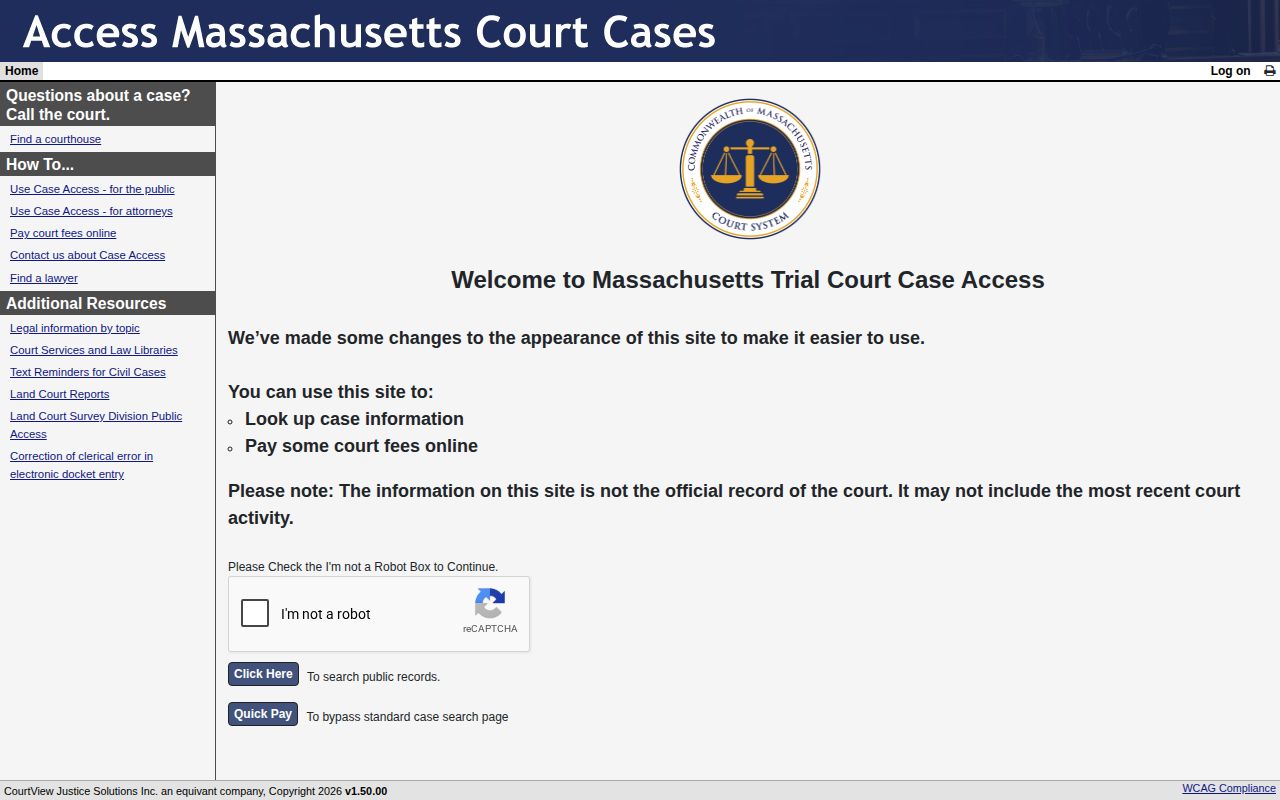
Identify the municipality, likely court, and docket number before using the court record to corroborate a sheriff or MADOC release.
Norfolk County Release Status Sources
Each public system answers a limited question. Matching the source to the custody type avoids false conclusions about Norfolk County released inmates.
| Custody or status | First source | What confirms release |
|---|---|---|
| NCSO county jail | NCSO phone routing and written request | Release transaction plus court docket |
| South Bay custody | Suffolk County facility record | Suffolk transaction plus Norfolk court record |
| MADOC prison | Massachusetts VINELink for current status | MADOC historical release record and court or parole source |
| Federal BOP custody | BOP Inmate Locator | Displayed release status plus federal docket or BOP record |
| ICE custody | ICE Online Detainee Locator | ICE result or assistance line, not the earlier NCSO record |
| Parole or probation | Parole Board or sentencing court | Agency verification subject to access limits |
The BOP Inmate Locator covers federal records from 1982 forward and can display “Released” or “Not in BOP Custody” with a release date. That means only that BOP custody ended. ICE’s locator can include adults released from ICE custody within the prior 60 days. A county-to-federal or county-to-immigration handoff remains another custody event until the receiving agency confirms otherwise.
Massachusetts VINE offers MADOC status alerts, but no NCSO VINE coverage. Eligible victims and witnesses may have separate routes through the confidential state Victim Notification Registry or NCSO Victim Services. Those services are not public release feeds.
Norfolk Release Searches and Closed Prisons
Norfolk County has two active MADOC institutions: MCI-Norfolk and Pondville Correctional Center. Old results can also point to MCI-Cedar Junction or Bay State Correctional Center. Cedar Junction stopped housing people in June 2023, and Bay State stopped housing incarcerated people years earlier.
A historical record may still name either closed institution as an admission, transfer, or release site. Send that facility name and the approximate date to MADOC Central Records. Do not search a closed location as though it has a current roster. The statewide MADOC record and sentencing docket are the durable paths.
Note: A closed Norfolk County prison name is a historical search clue, not evidence of current custody or release.
Norfolk Releases Through South Bay
Norfolk County women may be housed at South Bay House of Correction in Boston, while Norfolk men are generally held at the Dedham facility. South Bay serves women committed from Norfolk, Suffolk, and Plymouth counties. A Norfolk court case therefore does not ensure that the physical release occurred from a Norfolk County building.
Request the custody transaction from the Suffolk County Sheriff’s Department when South Bay held the person. Use the Norfolk charging or sentencing court for the docket, sentence, and release order. NCSO belongs in the chain only when it owns a related booking or transfer record. This county-serving exception is why the facility name must be identified before a records request is sent.
Norfolk Release Planning Starts Early
NCSO says reentry planning begins with a team meeting within 72 hours of arrival and a working Transition Plan. The local H.O.P.E. Center serves Braintree and Quincy through appointment-based navigation. Its support can include state identification or driver’s-license help, health-insurance navigation, treatment referral, and peer recovery coaching.
These services can help with a return to the community, but participation is not legal proof of release. Verify the custody event through NCSO, Suffolk County, or MADOC records. The Norfolk County probation and parole resource explains the distinct supervision paths after release.
Norfolk County Release Facilities
Five active facilities belong in a Norfolk County released-inmate search. The record owner and next step depend on the facility type.
- Norfolk County Correctional Center: NCSO records a community exit, transfer, or other lawful disposition; confirm it with the court docket.
- Dedham Alternative Center: placement is still custody or a structured step-down; a later community exit uses the NCSO and court path.
- South Bay House of Correction: Suffolk County owns the custody record for Norfolk women held there; pair it with the Norfolk court record.
- MCI-Norfolk: MADOC records discharge, parole, or transfer from this state prison.
- Pondville Correctional Center: its pre-release mission does not mean a named person has left custody; verify through MADOC, parole, and court records.
No active federal BOP prison or dedicated ICE detention center was identified in Norfolk County. Federal and immigration channels still matter when another agency receives the person.